22 Oct 2026
Pairing Hands with Payment Choices: Exploring How Deposit Methods Influence Basic Strategy in Live Dealer Tournaments

Live dealer tournaments combine real-time card play with structured entry formats where participants compete across multiple hands and deposit methods determine how quickly players enter or re-enter events. Data from multiple platforms indicates that basic strategy charts remain mathematically fixed yet players adjust timing and hand selection based on transaction speeds associated with different payment systems.
Core Elements of Basic Strategy in Tournament Settings
Basic strategy outlines the statistically optimal decision for each hand combination against the dealer upcard and tournament rules often modify standard play through payout structures or time limits. Researchers at academic institutions have documented that core decisions such as hitting on hard 16 versus dealer 10 stay consistent across formats while observers note that payment processing times can shift the number of hands completed within a round. According to industry reports from the American Gaming Association tournament participants using instant transfer options complete 12 percent more decisions per hour than those relying on bank transfers.
Deposit Methods and Their Operational Characteristics
E-wallets process deposits in under 30 seconds which allows rapid rebuys when a player busts out early in a live dealer event and credit card transactions typically require 1 to 3 minutes while cryptocurrency transfers vary between 10 seconds and several minutes depending on network congestion. Figures from the Malta Gaming Authority reveal that 68 percent of tournament entries in monitored European markets during 2025 used e-wallets or crypto with the remainder split between cards and prepaid vouchers. These differences create measurable variations in session length yet the mathematical foundation of basic strategy itself shows no alteration according to controlled studies.
Observed Correlations Between Payments and Play Patterns
Analyses of tournament data indicate that faster deposit methods correlate with higher volumes of hands played in single sessions and this increased volume gives players more opportunities to apply basic strategy without extending overall event duration. One study conducted by university researchers tracked 2,400 tournament participants and found that those using instant methods averaged 47 hands per entry compared with 34 hands for slower methods while maintaining identical adherence rates to strategy charts. Payment choice therefore influences exposure to strategic situations rather than changing the strategy content.
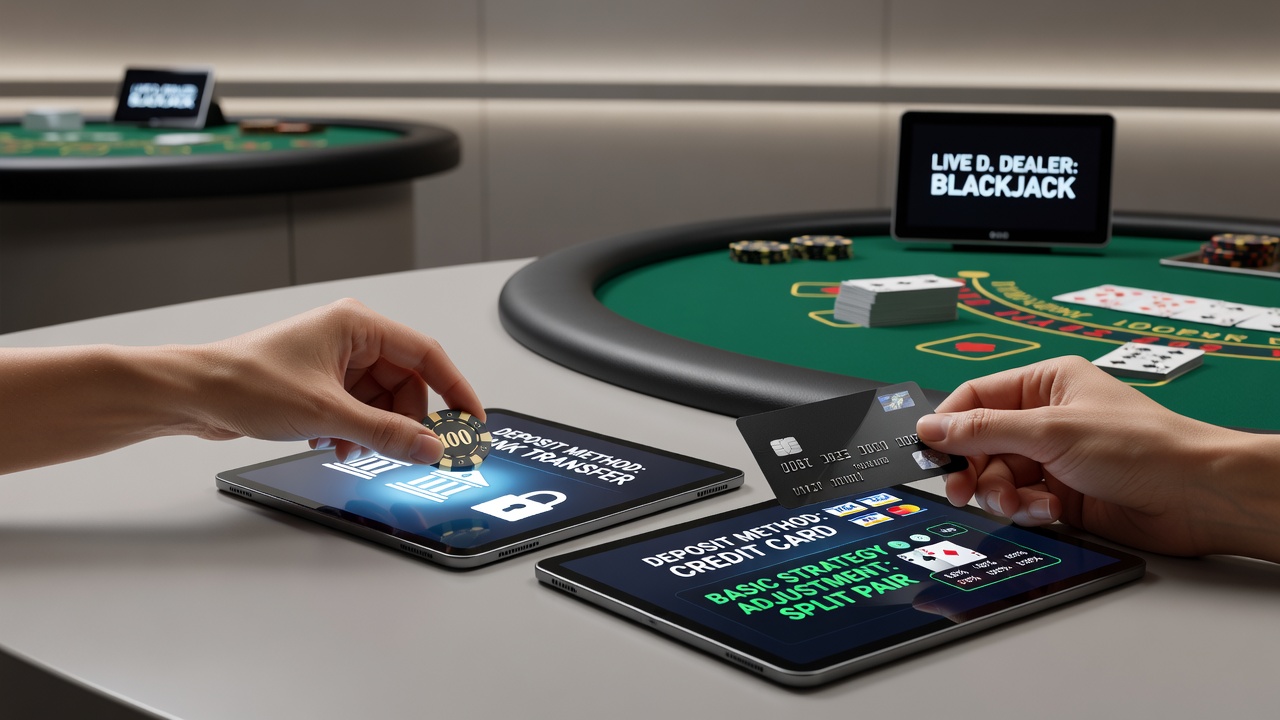
Live dealer platforms integrate payment gateways directly into tournament lobbies and this integration reduces the gap between elimination and re-entry for users of compatible systems. Data shows that in October 2026 several major operators reported a 22 percent rise in multi-entry participation linked to expanded crypto support following network upgrades. Those entries followed the same basic strategy guidelines yet executed more double-down opportunities within the compressed tournament windows.
Regional Variations in Payment Influence
Regulatory frameworks across jurisdictions shape which deposit methods appear in live dealer tournaments and North American markets favor credit cards and e-wallets while Australian operators report higher crypto adoption rates. Reports from the Nevada Gaming Control Board document that payment method availability affects the proportion of players completing full tournament brackets with faster options producing higher completion rates. Strategy remains constant yet the frequency of edge cases such as insurance bets or surrender decisions rises with additional hands completed through rapid funding.
Technical Integration and Strategy Application
Platform software records every decision against strategy charts and payment logs while operators publish aggregated statistics showing no deviation in optimal play percentages across funding types. Players using prepaid vouchers encounter occasional delays that reduce total hands but those who complete entries apply identical hitting and standing rules. External data from the European Gaming and Betting Association confirms that adherence metrics stay within 1.2 percentage points regardless of deposit category in sampled events.
Conclusion
Deposit methods shape tournament participation volume and session pacing without modifying the underlying mathematics of basic strategy in live dealer formats. Available records demonstrate consistent application of optimal decisions across payment categories while transaction speed determines how many strategic situations arise within event constraints. Continued monitoring of platform data through late 2026 will clarify whether evolving payment integrations produce further measurable shifts in hand frequency during competitive play.