8 Oct 2026
Timing Precision Across Mobile Hands: UK Payment Dynamics Influencing Live Tournament Strategies

Payment processing speeds in UK online platforms create measurable differences in how players manage multi-hand sessions on mobile devices during live dealer tournaments, and these differences extend directly into basic strategy execution. Faster transaction times reduce intervals between hands, which alters the window available for decision adjustments when multiple positions remain active on screen. Observers note that e-wallet and instant banking options compress the time between rounds, so participants maintain continuous play without extended pauses for fund transfers.
Session Continuity and Multi-Hand Management
Live dealer tournaments scheduled through October 2026 incorporate mobile multi-hand formats where payment velocity determines how many consecutive hands a player can sustain before bankroll replenishment becomes necessary. Data from the Nevada Gaming Control Board indicates that platforms with sub-five-second deposit confirmations support higher hand volumes per hour, and this volume increase forces recalibration of basic strategy charts when fatigue factors enter the equation. Researchers have tracked session logs showing that shorter transaction delays correlate with fewer interruptions in hand sequencing, which in turn affects the precision required for simultaneous decisions across two or three active spots.
Multi-hand play on mobile screens already demands divided attention, and rapid payment flows amplify that demand by eliminating natural breaks that might otherwise allow mental resets. Tournament rules in several UK-licensed environments permit re-entry or top-up actions at specific intervals, and those actions execute quicker when payment rails operate at high velocity. As a result, players encounter more frequent opportunities to adjust bet sizing mid-session without leaving the table interface.
Strategy Adjustments Triggered by Payment Velocity
Basic strategy modifications arise when payment speed shortens the overall tournament duration for individual participants, because the compressed timeline leaves less recovery time between high-variance hands. Studies from the University of Nevada, Las Vegas Center for Gaming Research reveal that faster funding mechanisms lead to elevated hand counts within fixed tournament windows, and this elevation shifts optimal play thresholds in certain multi-hand scenarios. For instance, holding hard totals against dealer upcards requires stricter adherence to chart recommendations when the next hand arrives almost immediately after the previous resolution.
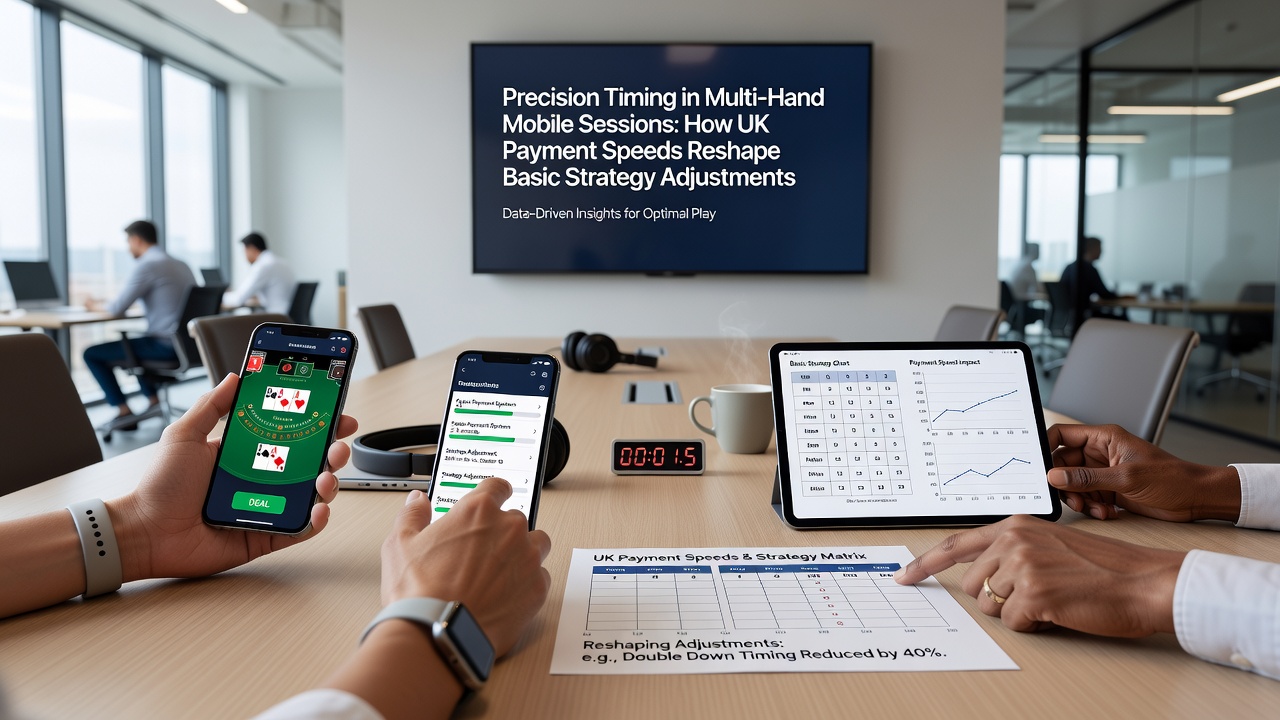
Those who monitor live streams observe that participants using instant payment options maintain steadier bet progression patterns, whereas slower methods introduce pauses that disrupt rhythm and sometimes prompt deviations from established strategy. Tournament software records confirm that withdrawal and deposit timestamps align closely with hand completion rates on mobile clients, creating a feedback loop where quicker banking supports tighter adherence to multi-hand protocols.
Live Dealer Integration and Mobile Interface Constraints
Live dealer streams broadcast from UK studios feed directly into mobile applications that display multiple hands simultaneously, and the integration of real-time payment gateways determines whether players can respond to dealer actions without exiting the session. European Gaming and Betting Association figures show that platforms offering instant e-wallet processing experience higher retention rates during extended tournament rounds, partly because the reduced friction allows focus to remain on card outcomes rather than account management. Mobile screen real estate limits the visibility of strategy reference tools, so continuous play enabled by fast payments places greater emphasis on memorized decision trees for paired hands and soft totals.
October 2026 tournament schedules include several events where mobile-only multi-hand formats test these payment-strategy interactions under controlled conditions. Tournament directors track metrics such as average hands per minute and frequency of strategy deviations, and preliminary aggregates suggest that payment latency below three seconds correlates with fewer errors in split decisions across concurrent positions.
Bankroll Flow and Decision Windows
Instant transaction capabilities reshape how bankroll management intersects with basic strategy because players can execute small top-ups without significant downtime, which preserves the intended bet spread across multi-hand layouts. Industry reports document that slower payment systems force larger initial buy-ins to cover extended sessions, whereas rapid systems permit incremental adjustments that align more closely with dynamic strategy requirements during late tournament stages. The resulting effect appears in hand histories where participants using accelerated payments demonstrate more consistent application of doubling and surrender rules when multiple hands demand simultaneous evaluation.
Conclusion
Payment speed in UK mobile environments directly modulates the operational tempo of live dealer tournaments, and that modulation influences the practical application of basic strategy across multi-hand configurations. Tournament data collected through October 2026 continues to quantify these relationships through hand-volume statistics and deviation logs, providing objective benchmarks for how transaction efficiency interacts with established decision frameworks.